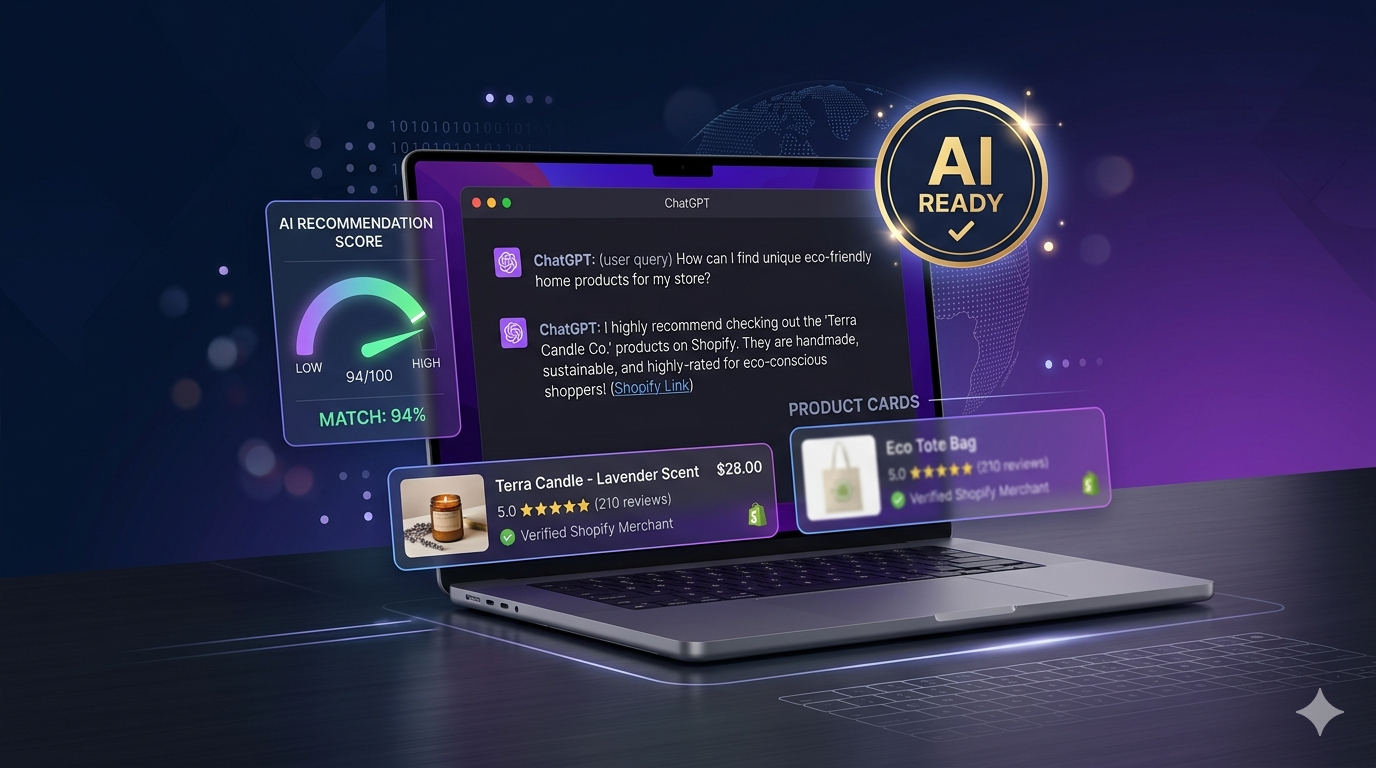
Most Shopify merchants are still optimizing for Google. Keywords, meta tags, backlinks. That playbook still works but it is no longer enough.
A new category of search is growing fast. When someone asks ChatGPT “what are the best loose gemstone stores in India” or Perplexity “which Shopify stores sell organic skincare” they do not get a list of links. They get a direct answer with specific store recommendations.
That is Generative Engine Optimization. GEO. And it works differently from everything you know about SEO.
How traditional SEO works
You optimize for keywords. Google crawls your pages, evaluates authority and relevance, and ranks you in a list of links. The user clicks. You get traffic.
How GEO works
AI platforms synthesize information from everything they have seen about your store. Your product descriptions, your blog content, how other sites talk about you, your structured data. They build a mental model of what your store is and who it serves. When a query matches that model, they mention you directly in the answer. No link required. The AI recommends you or it does not.
The key differences
Traditional SEO targets search engine algorithms. GEO targets AI model understanding.
Traditional SEO rewards keyword density. GEO rewards structured, authoritative, question-answering content.
Traditional SEO visibility means a click from a results page. GEO visibility means your brand name spoken directly in an AI answer.
What this means for your Shopify store
From tracking 51 Shopify stores and 4,907 AI citations inside FoundGPT, only 11.8% of stores get mentioned by AI platforms at all. The stores that do get mentioned consistently share three things:
Product descriptions written as answers to questions, not just feature lists. “Ideal for someone looking for a natural certified ruby for Jyotish purposes” beats “100% natural ruby, available in 3 carats.” FoundGPT’s AI Auto-Fix rewrites thin product descriptions into this format automatically.
Structured attributes that AI can parse. Material, origin, certification, use case. When this is buried in a paragraph AI cannot confidently recommend your product for a specific query.
Content that matches how people ask AI questions. A blog post titled “which gemstone to wear for Shani” will get cited by ChatGPT when someone asks that exact question. A blog post titled “buy gemstones online” will not.
FoundGPT’s AI Readiness Score grades your Shopify store against the 11 criteria AI platforms actually use to decide which store to recommend — and shows you exactly which of the three signals above you are missing.
The first step: understanding what llms.txt does and does not do
Most merchants who have heard about AI search optimization have added an llms.txt file to their store. That is a good start but it is not enough on its own. Read our full breakdown: llms.txt is not enough: here is what AI agents actually need from your store
The data behind this
We analyzed how 51 Shopify stores appear across ChatGPT, Gemini and Perplexity. The results were clear. See the full breakdown: We tracked 51 Shopify stores on ChatGPT and Perplexity: here is what we found
Where FoundGPT fits in
FoundGPT is built specifically for Shopify merchants who want to win in AI search. It audits your store across the 11 criteria AI platforms use to rank and recommend stores, generates your llms.txt file automatically, rewrites thin product descriptions with AI, and tracks whether ChatGPT and Perplexity are actually mentioning your store.
Traditional Shopify SEO apps were not built for GEO. FoundGPT was.
The window is open but closing
Most of your competitors have not figured this out yet. The stores that invest in GEO now will be the ones AI platforms cite consistently six months from now when this becomes mainstream.
Install FoundGPT free on the Shopify App Store and check your store’s AI readiness score in under two minutes.